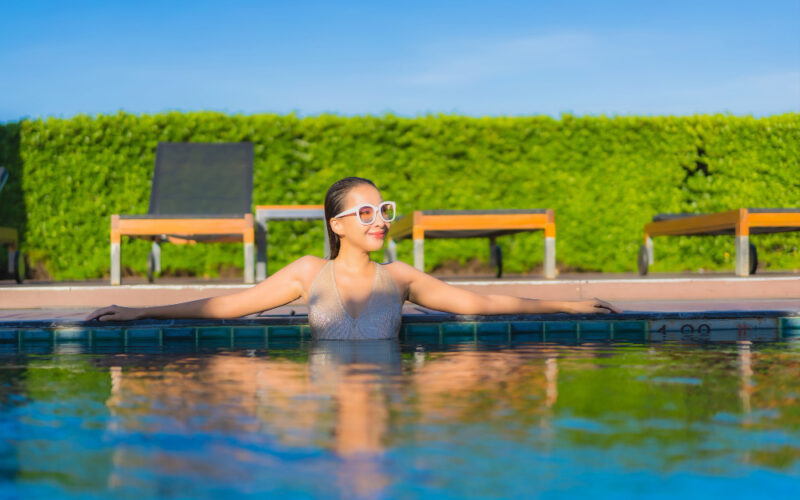
Nothing ruins a pool day quite like a surface too hot to walk across barefoot. It’s a problem people rarely think about until after the fact. By then they’ve already chosen paving based on how it looked in a showroom or a photo. Plan pool landscaping around how a surface will actually perform under direct sun, not just how it looks. You’ll dodge one of the most common regrets in outdoor design.
Why colour matters more than people expect
Darker surfaces absorb far more heat from direct sunlight than lighter ones. The gap in surface temperature between a dark and a light paving material can be huge under the same midday sun. One is genuinely comfortable to walk on barefoot. The other turns painful within seconds. This isn’t a minor aesthetic quirk. It’s a practical issue. It affects how usable a pool area actually is during the hottest parts of the day, which is often exactly when a pool gets used the most.
Lighter tones reflect heat instead of absorbing it. That’s part of why so many pool areas in hot climates lean toward pale, sandy or light grey finishes. Dark charcoal or black tones might look striking in a design rendering. In real life, though, they perform far less comfortably underfoot.
Material choice beyond just colour
Colour is only part of the picture. Different materials hold and release heat differently, regardless of their tone. Some natural stone stays noticeably cooler underfoot even in darker shades, simply because of how it conducts and releases heat. Meanwhile, some manufactured pavers in a similarly light colour can still get uncomfortably warm. Test a sample underfoot on a hot day if you can. That gives you a far more reliable read than a catalogue image or a small sample viewed indoors.
Texture matters too, for heat and for safety. A slightly textured surface reduces slip risk around a wet pool edge. It can also feel less intensely hot underfoot than a smooth, glossy finish exposed to the same sun. Ask your supplier for a sample board rather than relying on a single tile, since colour can vary slightly from batch to batch.
Planning for shade alongside surface choice
Surface choice solves part of the heat problem, but shade solves the rest. The two work best when planned together, rather than as separate afterthoughts. A pergola, a well-placed tree or a few well-positioned umbrellas can cut how hot a section of paving gets over a day. That extends the comfortable, usable hours around a pool considerably. Position shade based on how the sun actually moves across your yard. Don’t rely on a generic guess about where shade “should” go. You’ll get far more out of it if you plan around your own yard’s pattern.
This kind of planning benefits from watching your yard across a full day, ideally at different times of year. The sun’s path shifts a lot between seasons. A spot shaded in winter can sit in full sun for hours during summer. Jot down a few notes as you go, since it’s easy to forget the details once the design conversation starts.
Balancing heat performance with the overall look
None of this means a pool area needs pale, plain materials everywhere to feel comfortable. You can still work darker accents, feature strips or contrasting borders into a design. Just avoid covering the whole main walking surface in something that gets uncomfortably hot. The key is being deliberate about where those darker, heat-absorbent elements go. Use them as accents and borders, not as the main surface underfoot where people actually walk barefoot most often.
Testing before you commit to a large area
Heat performance can be hard to judge from a small sample. So lay a modest test section in the actual spot, if your project timeline allows it. It’s one of the more reliable ways to confirm a material will perform as expected. Do this before you pave an entire pool surround. This is a small extra step compared with the overall cost of a pool landscaping project. But it can prevent a genuinely disappointing result. That result often only shows up on the first proper hot day after everything’s already laid, once the paving is finished and replacing it is no longer a simple job.
Considering how the area will actually be used
How hot a surface feels also matters differently depending on how you actually use a pool area day to day. A family with young kids who spend hours barefoot around the water has a much lower tolerance for hot paving. Compare that with a household that mostly dips in briefly during the early morning or evening, when surface temperatures are naturally lower anyway. Be honest about your real usage patterns. Don’t design purely around how the space looks in photos taken at a flattering time of day. You’ll end up with choices that hold up better against how the space is genuinely lived in.
Combining zones rather than one uniform surface
A pool area doesn’t need one uniform surface throughout. Combine a cooler, lighter material in the main barefoot zones right around the pool edge. Use a different material further back, in areas used more for seating or walking in footwear. That way you balance heat performance where it matters most with more design flexibility elsewhere. This zoned approach often produces a more interesting result than a single material stretched across the whole area. It still solves the heat problem exactly where it’s most likely to cause discomfort.
Walk through a typical week in your own household honestly, rather than an idealised version of it. Do this before you decide which zones need the most protection from heat. A little planning around this trade-off goes a long way. It helps a pool area stay genuinely enjoyable through the hottest months, rather than one that looks impressive in photos but goes unused during the very weather it was designed for.