Tag: CORONA virus

  • Things you should keep in mind before going for COVID-19 tests

    Things you should keep in mind before going for COVID-19 tests

    The everlasting testing procedure for COVID-19 must be founded on the system of open and licensed private labs sourcing testing consumables from providers, whose quality has been verified by focal government organizations.

    At the point when a transmittable infection flare-up starts, the perfect reaction from general wellbeing is to start early and quick testing. This prompts fast recognizable proof/following of cases, snappy treatment and quick disconnection to maintain a strategic distance from the spread of this sickness. Early testing likewise assists with recognizing high hazard contacts; any individual who came into contact with contaminated individuals. In this way, they also can be immediately treated to diminish the power of the spread. Early testing is urgent to treat, seclude or hospitalize individuals who are contaminated; contingent on seriousness of disease. Testing is a significant stage in the greater general wellbeing picture for lightening endeavours, helping specialists, spread and infectiousness of the sickness and describe the predominance.


    Different sorts of COVID-19 tests:

    • The RT PCR, Antibody Testing and Antigen Testing are the main tests which are being used in order to detect COVID-19.
    • Some are well founded than others; no single test is 100 percent precise. There are huge contrasts between them; in the manner in which they work, yet additionally their focal points and constraints, which are one of a kind to each.

    Get informed about COVID-19 testing in below video:

    (Source: YouTube https://www.youtube.com/watch?v=fMIy_2Oe9n8)

    As of now, determination of dynamic disease is finished with Reverse transcriptase polymerase Chain Reaction; RT-PCR test, the best quality level. The infection is comprised of a hereditary material called RNA. At the point when the infection enters have cells it utilizes RNA to duplicate itself. In this way, it’s an immediate test for distinguishing COVID – 19 viral particles from nasopharyngeal and oropharyngeal swabs gathered and shipped by means of Viral Transport medium (VTM). The RT-PCR test can just tell whether the individual has live or as of late dead infection in their body at the hour of test assortment. The probability of identifying the infection relies upon assortment strategies, seriousness of disease and how much time has gone since contamination. RT PCR tests are precise yet with high TAT and cost, it requires complex hardware and unidirectional settings, prepared staff to run the tests.

    Serology tests are unique in relation to the RT-PCR test. Rather than estimating hereditary material from the genuine infection, they measure your body’s reaction to being contaminated by the infection. Serology tests identify the antibodies your resistant framework makes to a disease. A portion of these antibodies are present moment and some are long haul, IgM (Immunoglobulin M) and IgG (Immunoglobulin G) separately. IgM antibodies against SARS-CoV 2 which grows at an early stage in a disease though IgG antibodies against SARS CoV-2 which are generally found after somebody has recuperated from contamination. Antibodies might be identified in your blood for a little while after you recuperate from COVID-19. In spite of the fact that these antibodies may give some resistance to the COVID-19 infection, there’s at present insufficient proof to realize how long these antibodies last or whether past disease with the infection shields you from getting another contamination. Studies on antibodies are progressing to study resistance.

    Antigen test:

    An antigen is the piece of infection that evokes an insusceptible reaction. Antigen tests search for antigen proteins from the viral surface. An antigen test can just uncover whether an individual is right now tainted with Covid-19. Previously/after the disease has passed, antigens won’t be available.

    See in below video how Corona virus antibodies tests explained:

    (Source: YouTube https://www.youtube.com/watch?v=EGVPSdp4iLs)

    A swab from the nose is gathered for this test, where there’s a high probability of infection particles being available. As per organizations, positive outcomes from antigen tests are profoundly precise, high explicitness. Be that as it may, there is a higher possibility of bogus negatives, so negative outcomes don’t preclude disease. Negative outcomes antigen test should be affirmed with a PCR test; moderate affectability. This test can be utilized as a state of care testing (POC). This is somewhat quick track testing, which is following positive cases and simplicity trouble on the current RT-PCR test. It takes just 30 minutes and less expensive.


    The way of doing these tests for a common man:

    PCR testing needs extricated RNA (hereditary material) from swabs. RNA extraction is process which contains lysis, authoritative and washing ventures; with joining of Internal control(IC). This IC is insurance of appropriate RNA extraction and ought to be perused at the hour of result understanding alongside other Quality control (QC). Extraction should be possible physically, by semi-robotized/completely computerized instruments. After extraction; expansion of compounds and ground works and tests explicit for covid-19 (planned so that it will tie and intensify just and just Covid-19 explicit qualities) blended in with RNA specifically mix. This technique likewise can be performed physically or mechanized with the assistance of fluid handler mechanical arm frameworks. PCR utilizes this RNA for intensification. The initial phase in the testing procedure is to change over the viral RNA into DNA utilizing the compound opposite transcriptase so name RT PCR. When this is done synthetic concoctions are utilized to intensify Covid-19 explicit arrangement so it tends to be perused by the PCR instrument; Thermal Cycler and with exact programming. PCR comprises of three stages denaturation, toughening and lengthening with definite number of cycles alongside explicit temperature. By setting up the edge results can be dissected and announced as RNA Detected or Not Detected. This general arrangement of technique takes 4-5 hrs.

    Antibody testing/Serology testing:

    The stages for COVID-19 serology tests in the market incorporate sidelong stream measures, ELISA (catalyst connected immunosorbent examines), chemiluminescent microparticle immunoassay (CMIA) and chemiluminescent immunoassays (CLIA)/electro-chemiluminescence immunoassays (ECLIA) for identification of explicit or absolute antibodies. These examine types vary by the way they distinguish neutralizer antigen official. The plasma/serum test is included the little wells of an ELISA plate (protein covered microtiter plate). In the test, the covered protein consolidate with COVID-19 antibodies in test, expansion of conjugate ties with complex of immunizer antigens on the microplate. With the substrate, it will produce a measure of shading. The profundity of shading is relative with the substance of the COVID-19 immune response, when the estimation of shading is more prominent than the cut-off worth, can be proclaimed as positive for Covid – 19 antibodies. It very well may be performed physically or robotized stages.

    Antigen testing:

    Antigen tests search out explicit proteins just found in the infection, which the body’s insusceptible reaction perceives as ‘unfamiliar’. It is a POC test, performed outside the customary research facility setting. Most COVID-19 antigen tests focus on the ‘spike protein’ present on surface of the coronavirus. A swab from the nose is gathered for this test, where there’s a high probability of infection particles being available. The swab is then drenched in an answer that deactivates the infection, and afterward moved onto a test strip. The test strip contains antibodies that predicament to these particular proteins and hold them set up as the liquid spreads as a control band and test band. On the off chance that the example is certain for coronavirus, hued lines will appear on the paper strip in 15-20 minutes.

  • Things to know about recent lockdown in Victoria due to increasing Covid-19 cases

    Things to know about recent lockdown in Victoria due to increasing Covid-19 cases

    (Source: YouTube https://www.youtube.com/watch?v=hfhP7TRziDg)

    Melbourne is set to go back to Stage Three after Victoria reported the biggest single day of new Covid-19 cases.

    The six-week lockdown is set to take place at midnight on Wednesday, forcing Melbourne to return to uncertain territory in its fight against the pandemic.

    The move comes just a few hours after Premier Daniel Andrews announced a jump in 191 cases in just one day.

    The lockdown will apply to all Melbourne and Mitchell Shire metropolitans, which Andrews announced to his state on Tuesday.

    At this point, because of their low case numbers, restrictions are not due to a change in the Victoria Region.

    Read more on https://www.theguardian.com/world/live/2020/jul/07/coronavirus-australia-live-news-army-adf-nsw-victoria-border-lockdown-covid-19-police

    What is the new lockdown going to mean?

    There are only four reasons people will be able to leave their place of residence in the affected areas.

    These include food shopping and essentials, care and care, daily exercise, work and study-if you can’t do it from home.

    While the lockdown mostly looks the same as the one the state had previously faced, there are some notable changes.

    This is what you need to learn about the new COVID-19 rules and how to keep you and your loved ones safe, as Victoria re-enters stage three restrictions.

    After a gradual relaxation of restrictions across the state, Melbourne will be back in the lockdown from midnight tomorrow (7 July).

    Premier Daniel Andrews announced at a press conference earlier today (6 July) that stage three restrictions would be reintroduced, with the state recording 191 new COVID-19 infections over the past 24 hours – the highest since the crisis began – taking Victoria ‘s total number of infections to 2824 cases and 22 deaths.

    There are now 772 active cases in Victoria where corona virus testing is close to 1 million (more than 979,253,000 tests have currently been conducted across the state).

    New lock-down measures are coming as NSW prepares to close the Victorian border in an effort to limit community transmission of the virus.

    Metro Melbourne to re-enter lockdown, VIC-NSW border to close as Victoria records its highest daily increase in new cases.

    Metropolitan Melbourne (including Mitchell Shire) residents will be returning to stage three from 11:59 p.m. tomorrow (8 July). The tough stay-at – home orders that will be in place for at least six weeks have been announced by Prime Minister Daniel Andrews after the state has recorded its highest number of new infections since the crisis began.

    Under the reintroduction of stage three restrictions, there will be only four reasons for Melbournians to leave their homes.

    1. Work or study (if you can’t do it from home)
    2. Shopping for essential goods
    3. Care and medical reasons
    4. Exercise (but people cannot travel out of locked-in areas to do so)

    The Prime Minister also announced that school holidays will be extended by one week, with the exception of VCE students (11 and 12 years old, as well as 10 students taking VCE subjects) who will return to school for face-to – face classes as usual on Monday. Students will also be returning to special needs.

    Strict stay at home will also see no visitors allowed in people’s homes, as well as public gatherings limited to two people outside the immediate household, while cafes, pubs, bars and restaurants will come back to offer take-away only. Retailers and hairdressers may remain open, but most of them comply with social distances and capacity regulations.

    Strict stay at home will also see no visitors allowed in people’s homes, as well as public gatherings limited to two people outside the immediate household, while cafes, pubs, bars and restaurants will come back to offer take-away only. Retailers and hairdressers may remain open, but most of them comply with social distances and capacity regulations.

    In addition, all Victorians are prohibited from crossing the NSW border from 11:59 p.m. tonight (7 July), as Victoria’s COVID-19 cases continue to rise.

    The total closure of the border was announced by Prime Minister Daniel Andrews following the crisis talks with Prime Minister Scott Morrison and NSW Prime Minister Gladys Berejiklian. It will be enforced on the NSW side of the border, and the Victorians will require permission to enter. Special provisions will be in place for border communities such as Albury-Wodonga, as well as freight and other critical services that are bound to travel to NSW.

    The decision to close the border was taken to limit movement outside Victoria after two deaths and 127 new infections occurred in the last 24 hours, the highest daily increase since the crisis began.

    NSW Police Commissioner Mick Fuller warned that the border would be heavily guarded.

    He said there is currently a fine of $11,000 and a six-month jail sentence for people who cross the border illegally, but said the police had asked for more powers under the NSW Health Act specifically for those coming from Victoria’s COVID-19 hotspots.

    Prime Minister Daniel Andrews urged all Victorians to abide by the rules of their homes and to be tested if they have symptoms.

    He said, “I know it’s hard. I know people are sick and tired and tired, but that’s where we ‘re.”

    Despite the easing of certain restrictions, the Prime Minister appealed to people to make use of common sense and to make judgments in public.

    Which suburbs are included in the Melbourne Metro Restrictions?

    The metropolitan Melbourne is made up of the following local government areas:

    • Banyule
    • Bayside
    • Boroondara
    • Brimbank
    • Cardinia Shire
    • Casey
    • Darebin
    • Frankston
    • Glen Eira
    • Greater Dandenong
    • Hobsons Bay
    • Hume
    • Kingston
    • Knox
    • Manningham
    • Maribyrnong
    • Maroondah
    • Melbourne
    • Melton Shire
    • Monash
    • Moonee Valley
    • Moreland
    • Mornington Peninsula Shire
    • Nillumbik Shire
    • Port Phillip
    • Stonnington
    • Whitehorse
    • Whittlesea
    • Wyndham
    • City of Yarra
    • Yarra Ranges

    Some important lockdown Rules for Melbourne Metropolitan

    Metropolitan Melbourne is subject to the following stage-three stay-at – home restrictions.

    • Residents can leave their homes only to go to work or to school, to buy food and other essentials, or to exercise or take care of themselves.
    • People must remain in their permanent place of residence. They are not allowed to travel to holidays or other homes.
    • Victorians living outside the hot zones are not allowed to visit unless for one of the four reasons mentioned above.
    • Businesses and facilities that have reopened must close down again. These include entertainment venues, places of worship, community facilities and beauty salons (hairdressers may stay open). Restaurants and cafes return to take-away and deliveries only.
    • Shopping centers and outdoor markets must apply a four-square-metre rule to limit the number of shoppers.
    • You cannot visit a host family or friends unless you provide care or compassionate care, provide a service or work.
    • Partners living separately may visit each other at home.
    • If you were on holiday when the restrictions started, you may continue as planned, but restrictions will apply to your return.
    • Schools are expected to be re-opened to VCE and students with special needs only as of 13 July, with school holidays to be extended by one week.

    Read more on below links:

    how washing your hands can prevent you from COVID-19 how to make your own hand sanitizer

    the things we should do when we are self-isolated and quarantined

    facts you need to know about coronavirus

    advice to improve your immune system in the midst of panic over coronavirus


  • Israel serve claims ‘achievement’ in creating antibody against corona virus

    Israel serve claims ‘achievement’ in creating antibody against corona virus

    How antibody used to make immunizations?


    An antigen explicitly initiates the creation of antibodies which can tie to it and kill it. While most immunizations work by prompting B lymphocytes to create antibodies (see underneath), enactment of T-cells — another kind of safe framework cell that ensures against malady — is likewise significant for certain antibodies.


    To what extent does it take to make antibodies after immunization?

    By and large, it takes around fourteen days in the wake of getting an immunization for antibodies to create in the body that secure against the infections the immunization is made to ensure against. Most immunizations require more than one portion after some time to create insusceptibility and durable insurance.

    A “critical achievement” in building up an antibody to the novel corona virus has been made by Israel’s fundamental organic research organization IIBR that can assault the infection and kill it inside the collections of the individuals who contract it, nation’s Defense Minister Naftali Bennett affirmed, news office PTI expressed.

    An announcement gave by Bennet’s office said the Israel’s Institute for Biological Research (IIBR), ordered to build up an immunization for coronavirus, has differentiated an antibody “that assaults the infection in a monoclonal way and can kill it inside the groups of those evil”.

    “I am glad for the establishment staff for this tremendous forward leap,” Bennett stated, including that “their imagination and the Jewish brain realized this stunning accomplishment”.

    The announcement, be that as it may, didn’t explain whether human preliminaries for the immunization were led. As indicated by PTI, the IIBR has directed some clinical preliminaries. The scientists have distinguished the protein that is proficient in murdering the infection in a patient’s body, and the organization would distribute a paper soon about the discoveries, PTI expressed.

    (Source: YouTube https://youtu.be/E7FJrdIEQiU)

    Comparable reports by Israeli day by day Ha’aretz, prior in March, uncovered that researchers at the establishment had made a huge forward leap in understanding the organic component and characteristics of the infection, including better symptomatic ability, creation of antibodies for the individuals who as of now have the infection and improvement of an immunization. Be that as it may, the Defense Ministry had denied any forward leap in those days expressing that “if and when there will be something to report, it will be done in an organized manner”

    Referring to news entryway Ynet, PTI said five shipments of infection tests showed up in Israel from Japan, Italy and different nations in February. They were brought by a uniquely made sure about Defense Ministry dispatch to IIBR and had been solidified at – 80 degrees Celsius. There has been serious work, including by driving specialists, to build up the antibody from that point forward

    The IIBR is under the management of Prime Minister Benjamin Netanyahu’s Office, yet is in close correspondence with the Defense Ministry.

    Israel was one of the primary nations to close its outskirts and force progressively rigid limitations on development to hamper the local coronavirus flare-up. It has detailed 16,246 cases and 235 passings from the ailment.

    Researchers and research groups the world over are attempting to build up an immunization for Covid-19 as infection connected passings have, up until this point, arrived at 252,102 and contaminations over the globe flooded to over 3.6 million, as per Johns Hopkins University.

  • Here’s the means by which to Expose Corona virus falsehood and paranoid fears from loved ones

    Here’s the means by which to Expose Corona virus falsehood and paranoid fears from loved ones

    Deception and family
    While the corona virus pandemic has separated loved ones inside their homes, it has by and large expanded on the web or via telephone correspondence with friends and family. For example, that my family’s iMessage bunch chain has never been busier. Family members are determining the status of one another, sharing updates, and giving some genuinely necessary lighthearted element.

    However, now and again, family members and companions share poor data – regardless of whether it is terrible science identified with how to forestall the infection, exposed gossipy tidbits about urban communities being put on lockdown, or paranoid notions about the birthplaces of Covid-19. While any strain of deception isn’t perfect, falsehood identified with a general wellbeing emergency has a particularly perilous component to it. Here’s you can see How WhatsApp tightens limits amid Corona pandemic

    NYT’s Rukmini Callimachi put it along these lines prior in the week: “I concede that it was somewhat entertaining when relatives, who don’t comprehend where to get confirmed news, succumbed to psycho tricks. Like the thought 9/11 was an inside activity or that the moon arrival was phony. We’re presently at a point where deception may cost [people] their lives.”

    To be sure, awful data during a general wellbeing crisis represents a hazard to the individuals who succumb to it. So you will probably have the desire and feel the duty to address it. Be that as it may, it very well may be amazingly cumbersome to address falsehood or expose paranoid ideas when it is being shared by a family member or old buddy. So what’s the best way to deal with take? A few specialists offered their guidance..

    Know this: Individuals need to share exact data

    Prior to making any move, it is critical to recollect that a great many people have no expectation of sharing awful data. Truth be told, a great many people need to do the specific inverse of that. “The research,” MIT educator David Rand, who contemplates falsehood, let me know, “suggests that individuals truly would like to share just precise data. … The individuals on your family bunch chain, most web based life clients need to just be sharing stuff that’s accurate.”

    So for what reason do individuals share terrible data? They probably won’t know better, and the kind of substance flowing during a wellbeing crisis may make them less wise, Rand stated: “There’s proof that all the more sincerely suggestive substance makes individuals less recognizing. Specifically, when individuals depend on instinct and feeling they are bound to accept bogus cases. Explanations, for instance, that are unnerving make individuals less slanted to stop and consider it.”

    Be compassionate

    “The initial step is to have a feeling of empathy,” BuzzFeed correspondent Craig Silverman, who has investigated bogus news for quite a long time, let me know. Silverman noticed that individuals are sharing data since they give it a second thought and are either attempting to help or feel like they are a piece of a bigger discussion. “People, particularly loved ones in bunch chats,” he noted, “they are doing whatever it takes not to be malicious.”

    Emily Vraga, an educator at the College of Minnesota who examines wellbeing deception, revealed to me that examination she has directed has demonstrated that a dull true amendment is “equally as effective” as one in which the individual adopts an increasingly compassionate strategy. “So I think utilizing that positive compassionate tone is better in light of the fact that the amendment despite everything works and it doesn’t cause [the individual you’re correcting] to feel tossed under the bus,” she said.

    Refer to definitive sources
    Something else to remember is the source you are utilizing to address the falsehood. For example, your Trump-supporting uncle may be less disposed to accept outlets he sees as incredulous of the President. “If it originates from a news outlet they don’t care for, they’re not going to react well,” Silverman brought up, proposing individuals consider refering to sources like the CDC.
    Since certain individuals may be incredulous of even the national government, Vraga prescribed refering to neighborhood sources. That could incorporate the state or city wellbeing division, or nearby news sources that may show up increasingly sound to the individual you are attempting to speak with.

    Talk one-on-one
    Rand said inquire about demonstrates that individuals “are increasingly responsive to revisions that originate from their loved ones contrasted with arbitrary people.” All things considered, he noted you “want to utilize language that imparts you are attempting to be helpful” and not angry.

    Silverman proposed in the event that you have a relative or companion who has shared awful data that it may be smarter to connect secretly. “Maybe send them a message and state, ‘Hey, I saw you simply posted this. I have seen some data that appears to negate this.’ Consider how you can take it one-on-one out of an individual way and give them data from a source they are probably going to trust.”
    “Pre-bunking” rather than de-bunking

    Rand accentuated that his exploration demonstrated that “when individuals stop and consider things, they are in reality truly adept at determining what is valid and what isn’t valid, however only not as far as what they share.” Rand included, “If you simply push individuals to contemplate exactness, it can have a genuine impact.”

    Rand’s point was that it tends to be useful to concentrate on helping take safeguard measures, rather than more than once managing exposing. He called it “pre-bunking.” So how would you do it? “Find some evident bits of information,” Rand prompted. “Then state, ‘Hey, I discovered this from the World Wellbeing Association. What do you think?’ And afterward individuals will understand that and it will get them to think about precision and sources.”

    You have a duty
    One thing everybody conceded to: You have a duty to help right awful data. “When the deception can truly harm people’s wellbeing, I do think we as a whole have a responsibility,” Silverman noted. “You don’t need individuals to do things that are awful for them or awful for society,” included Rand.

    Also, Vraga recognized it isn’t in every case simple to address close family or companions. “These are connections we care about, individuals whose great sentiment we need to keep up and convey forward,” Vraga said. In any case, she stated, “It’s a method for paying special mind to one another, and it tends to be awkward at the time, however ideally over the long haul it’s accomplishing more acceptable than harm.”

    Fake news stories are all over the internet–from cures to coronavirus to fake government announcements. So here’s your best bet to making sure you’re getting correct information.

  • WhatsApp fixes restricts on message sending to counter corona virus falsehood

    WhatsApp fixes restricts on message sending to counter corona virus falsehood

    WhatsApp is attempting to stem the quick spread of corona virus falsehood by putting new cutoff points on the occasions a sent message can be shared at the same time. A message got by an individual on the Facebook (FB)- claimed stage that has just been sent multiple times can now just be given to each talk in turn.

    As far as possible the new limitations of WhatApp are the strictest yet. The chat application has been slowly fixing the limitations on its sending capacity, where a client can without much of a stretch pick various gatherings or individuals to get the message. Two years prior, a client could give a sent message to 250 gatherings on the double, with each gathering equipped for facilitating many clients.

    By a year ago, the organization had decreased that cutoff to five gatherings one after another. Presently it’s one, albeit a client could hypothetically still advance a similar message to people or gatherings individually.

    “We’ve seen a noteworthy increment in the measure of sending which clients have let us know can feel overpowering and can add to the spread of misinformation” WhatsApp said in a blog entry. “We accept it’s imperative to slow the spread of these messages down to keep WhatsApp a spot for individual conversation.”

    WhatsApp has for quite some time been tormented by falsehood, yet the simplicity with which its gathering visits and sending abilities can be utilized to spread such substance has been amplified by the corona virus pandemic.

    Not at all like Facebook or Instagram, WhatsApp completely scrambles its messages, which means the organization has no clue what’s being said or shared. Also, dissimilar to Facebook, it doesn’t have the capacity to append a notice and clarification to posts regarded bogus by actuality checkers.

    WhatsApp, as other content informing stages, has been utilized as of late to spread messages that regularly contain a blend of cases about the infection, some exact and some that have been exposed by clinical specialists. The issue is currently so intense that world chiefs are asking individuals to quit sharing unsubstantiated data utilizing the application.

    The five-time fowarding limit was presented after viral deception messages in India added to in excess of twelve lynchings in 2018. WhatsApp says sending was decreased by 25% subsequently.

    Specialists invited the more tightly limit declared on Tuesday however said it despite everything doesn’t go far enough.

    London School of Financial aspects teachers Shakuntala Banaji and Smash Bhat, who have contemplated the spread of deception through WhatsApp in India, said stricter sending cutoff points ought to have just been set up.

    Banaji and Bhat disclosed to CNN Business that without different measures, such as having the option to report, boycott and arraign clients who pass on disdainful deception,” this new measure for much sent substance will perforce end up being ineffective.”

    “Our work in India proposed the earnest requirement for forward cutoff points as one of a heap of measures so as to check the fast spread of detest discourse and misinformation,” they included.

    An investigation directed a year ago by the Government College of Minas Gerais in Brazil found that while constraining sending to five gatherings could defer the spread of falsehood “depending on the virality of the substance, those cutoff points are not compelling in forestalling a message to arrive at the whole system quickly.”

    WhatsApp has made different strides in the light of the corona virus pandemic to battle deception, for example, giving cash to reality checking associations, some of which run accounts individuals can send messages to. They’ve likewise collaborated with universal and national wellbeing associations to make visit bots that can respond to people’s corona virus questions. The stage is additionally dealing with another element that would permit clients to take a message they’ve gotten and rapidly search the web to check its substance.

    Here below is the video showing Fact check of WhatsApp messages related to COVID-19:

    (Source : YouTube https://www.youtube.com/watch?v=WQHYcHO8IQM)

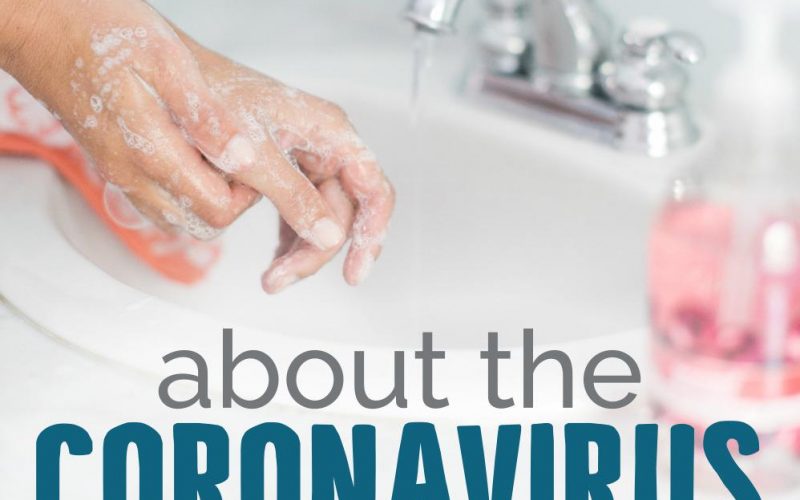
  • How washing your hands can prevent you from Covid-19? How to make your own hand sanitizer?

    How washing your hands can prevent you from Covid-19? How to make your own hand sanitizer?

    For all the confounding changes that have come out of the coronavirus pandemic, there has been at least one clear piece of advice: wash your hands. And why is something so basic so important, and what function does it have to control the spread of this virus?

    ‘There are two benefits of washing your face,’ said one of the Microbiologists. First of all, by brushing them with soap and placing them under the tap, you’re actively extracting a lot of dirt and viruses and other things that may be in your hair.

    Structure of the virus

    The virus is called coronavirus because of the corona, the crown that protects it. We are primarily composed of protein. The next step is the exterior surface of the virus, and that’s the lipid. And the important thing about lipids is that they really interact with soap and detergent. The key target of the virus is what we call the RNA-the radioactive material or the DNA. Viruses can not replicate on their own-but they are still susceptible to soaps and detergents being destroyed, and other agents like alcohol are still very powerful.

    The science of soap

    Viruses can be present outside the body for hours or days. Disinfectants, oils, pads, gels and alcohol-containing creams are all handy to get rid of them – but they are not as good as regular soap.

    Why is soap acting so well on Sars-CoV-2, coronavirus, and indeed other viruses? The short story: since the virus is a self-assembled nanoparticle where the weakest component is the lipid (fatty) bilayer. Soap dissolves the fat membrane and the virus falls apart like a house of cards and dies – or better, we would say it is dead because the viruses aren’t even alive.

    The somewhat longer version is that most viruses consist of three main building blocks: ribonucleic acid (RNA), protein and lipids. A virus-infected cell produces all of these building blocks, which then naturally combine to create a virus. Critically, there are no heavy covalent bonds binding these units together, which ensures that you do not actually require tough chemicals to isolate these units. When an infected cell dies, all these new viruses will emerge to kill other cells. Many wind up in the airways of the body, too.

    If you cough, or particularly if you sneeze, tiny droplets will travel up to 10 meters from the airways. The larger ones are thought to be the main coronavirus carriers and can be at least two meters away. Such small droplets stop on the surface and sometimes dry up easily. Yet the viruses are still around. Human skin is the perfect surface for a virus. It is “normal” and proteins and fatty acids interact with the virus in the dead cells on the surface. When you reach, say, a steel surface with a virus particle on it, it sticks to your skin and is passed to your hands. If you touch your face, particularly your eyes, nostriles or mouth, you can get infected. And it turns out that most people brush their faces once every two to five minutes. Wash the virus off with water on its own could work. But water is not good at dealing with solid, sticky interactions between the skin and the virus. The water is not enough.

    The soapy water is totally different. Soap contains fat-like compounds known as amphiphiles, some of which are structurally very similar to lipids in the membrane of the virus. Soap molecules “compete” with the lipids in the nucleus of the virus. That is more or less how soap often extracts natural soil from the face. Soap not only loosens the “glue” between the virus and the flesh, but also velcro-like attachments that bind together proteins, lipids and RNA in the virus.

    Alcohol-based products, which include nearly all disinfectants, contain high-percent alcohol solvent (usually 60-80 per cent ethanol) and kill viruses in a similar way. Yet soap is easier because you only need a comparatively limited quantity of soapy water, which, with pressure, will quickly cover your whole side. Whereas you need to actually soak the virus in ethanol for a short period, cleaning or rubbing a solvent on your hands does not guarantee that you soak every corner of your skin in your hands efficiently enough. Yeah, soap is the safest, but please use an alcohol-based sanitizer when soap is not feasible or convenient.

    The effectiveness of hand sanitizers

    “Over the last 10, 20 years, we have usually used hand sanitizers in hospitals,” several doctors said. There are two explanations for this. Alcohol is also effective at killing viruses and bacteria, even viruses that don’t have lipid envelopes. Even, you don’t need a sink near you, so you can do it right at the bedside, and there are realistic hand sanitizer applications.

    There’s probably not a lot of difference between soap and water and hand sanitizers when you’re at home-the sanitizer would be more useful in an area where you don’t have easy access to a sink or water.

    Making your own hand sanitizers

    Alcohol of any sort works-but with 100% alcohol, it doesn’t work as well. It also needs to be mixed with water or some other water-containing substance in such a manner that it is between 60 and 70 per cent-and this is the concentration of most sanitizers marketed commercially.


  • The things we should do when we are Self-isolated and Quarantined

    The things we should do when we are Self-isolated and Quarantined

    As health officials seek to suppress the COVID-19 outbreak, growing numbers of people are told to self-quarantine or to separate themselves every day. And if you’re a parent or caretaker of elderly people, you might feel exhausted just as you talk about these steps. Although these terms can cause sci-fi visions of hazmat suits or cushioned solitary cells, the fact is much less scary. Here’s what you need to know if you’ve been told to self-quarantine, or someone you know.

    What is the difference between self-isolation and Quarantine

    Difference between Self-isolation and Quarantine (Source : Youtube https://www.youtube.com/watch?v=qIbC85y8bJA)

    The CDC reports that quarantines will restrict the travel of people that may be vulnerable to infectious diseases to see if they get ill. Such individuals are asymptomatic but either have moved to an area of active viral outbreak or have been closely connected with a lab-based case of COVID-19. Self-quarantining helps health authorities to track signs closely and avoid further spread of the virus. The self-quarantine person is told to stay at home and to prevent encounters for 14 days.

    For the end, loneliness means the alienation of sick persons from the rest of the population. Self-isolation allows people the opportunity to heal from the virus without transmitting it to other individuals. Patients having screened COVID-19 in a positive manner will auto-isolate until:

    • You have not had any fever for least 72 hours (this means no fever for three whole days without the use of medications to suppress fever) and
    • Other symptoms changed (e.g. increase in cough, or loss of breath) and
    • For least 7 days have elapsed after the symptoms come first.

    What would I do if I have been told to separate myself or to self-quarantine?

    (Source : YouTube https://www.youtube.com/watch?v=kZnJ-oPuYE0)

    While self-quarantine and self-insulation may be frightful, it is important to remember that the vast majority of people who have contracted COVID-19 up till now have mild cold or grip-like symptoms and recovered completely. That said, for anyone deemed high-risk the virus may be lethal. It is therefore very necessary that we take the measures needed to avoid spread of the virus. Here is how, during quarantine or isolation, you and others will defend yourselves:

    Stay at home

    Restrict the out- of-home trips to medical care and do not go to school or work. Additionally, you can stop public transit, ride-sharing and taxis. Consider using a meal or grocery delivery service where you can drop your food just outside your door if you need groceries.

    Separate yourself

    The CDC advises that you stay in one room as long as you can whether you live with roommates or family members. When necessary, you can have a different toilet as well.

    Put on a mask

    If you’re ill and have to go in public or be around other people, it’s necessary to wear a face mask to avoid the spread of the virus. Need to put a face mask on when you reach the doctor’s office or when you fly to and from your doctor’s appointments. If you don’t have one when you visit, the company will supply you with one that you can have on hand for home travel and potential use.

    Keep yourself away from pets

    While there have been no reported cases of animals spreading COVID-19 to humans, it is also advised that individuals with COVID-19 have limited interaction with animals until more evidence is available on the virus. When you need to take care of your pet if you’re away, make sure you wear a facial mask and wash your hands before and after engaging with your cat.

    Do not exchange personal belongings

    To avoid disease transmission, do not exchange with other persons in your kitchen plates, utensils, towels or other personal objects. They should be thoroughly washed with soap and water after using these things.

    Keep your hands clean

    Wash your hands regularly with soap and water for at least 20 seconds, and if soap and water are not available, use an alcohol-based hand sanitizer.

    Sweep and disinfect surfaces

    Replace “high-touch” surfaces, such as counter tops, doorknobs, sinks, phones and keyboards, using kitchen cleaners and wipers.

    Keep yourself engaged in exercise

    Staying busy will keep you both mentally and physically safe throughout your quarantine time. Exercise can help lower elevated cortisol levels as well as cause the release of endorphins, improving your overall health and satisfaction. If you feel well enough and do not have noticeable signs, attempt your exercise at home to prevent physical interaction with others. Just going up a few stairs or having a dance party in your house can be helpful.

    Stay in contact with friends and family

    Work suggests that spending time with people you care for will improve your level of satisfaction. When you’re self-centred, consider communicating with your friends and family via video chat or phone calls.

    Track your symptoms

    If your symptoms intensify, call your primary care doctor or call our 24/7 virtual health care team. Please stop going to one medical center or other health care establishment as instructed by your health care provider. When you have a medical emergency, please dial the emergency number.

    Even if you do not exhibit symptoms of COVID-19, it is important to obey these precautions for the full quarantine or isolation time. When you are not sure how to end your loneliness, please contact your health care provider.

  • Advice to improve your immune system in the midst of panic over coronavirus

    Advice to improve your immune system in the midst of panic over coronavirus

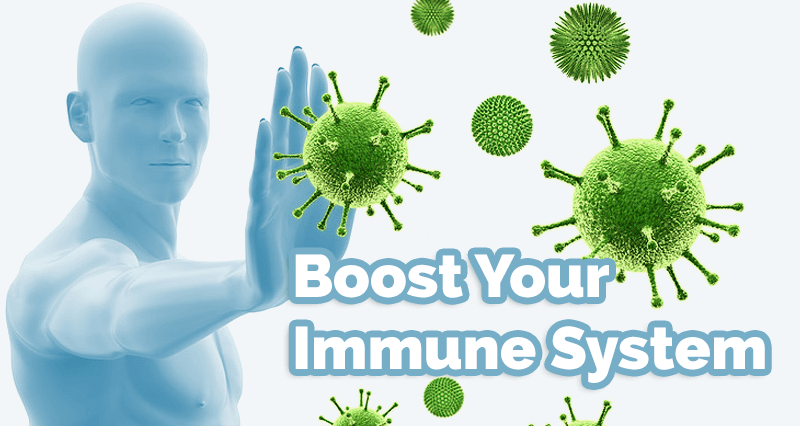
    Despite storing on hand sanitizer and shooting dirty looks like someone who refuses to wash their hands vigorously, the coronavirus scare is likely to make you worry about the state of your immune system. While normally your ability to catch a cold wouldn’t be a big deal, it seems of paramount importance now to keep the body in tip-top disease-fighting shape. And while there’s no cure, fast remedy, or guaranteed way to keep you from having coronavirus, there are steps you can take to make sure your immune system is in a peak state.

    (Source from : https://www.health.gov.au/news/health-alerts/novel-coronavirus-2019-ncov-health-alert  )

    • Eat organic, nutritious food from scratch that you prepared at home

    While cooking, add plenty of fresh fruit and vegetables, rather than depending on frozen food, takeaways or ready-made meals.


    • Make sure that you get high quality sleep

    Sleeping is going to restore health and our immune system.  Note that when we are sleeping the body restores itself, so we have to make sure that we get at least eight hours of sleep each night.


    • Take Zinc

    Taking zinc within 24 hours of common cold symptoms have been shown to reduce the duration of the symptoms.


    • Take vitamin C or take it as a supplement make sure your diet is high in vitamin C.

    Research has shown that animals capable of producing their own vitamin C are more immune to viral infections,” Viruses use an enzyme called neuramidase for cell attack. By reaction, the immune system releases a protein to combat the virus, called Interferon. Vitamin C can both inhibit neuramidase and increase the amount released by Interferon. Unfortunately our human bodies are unable to generate vitamin C naturally, so we have to make sure that we consume it from our diet or as supplements.


    • Stop drinking and smoking

    After a boozy weekend you know how you feel all tired and fragile? Alcohol and nicotine are not doing great things for the immune system, and while we are in a pandemic, you may want to stop them.


    • Take care of your digestive health

    Enzymes help improve chemical reactions and digestive enzymes help us digest food more efficiently while we are under viral attack,’


    • Take care at the gym

    Now is not the time for intense workouts–and not just because gym equipment is likely to be dirty. Nutritionist advises: ‘ Swap the gym for some Thai Chi, acupuncture or a long walk to prevent elevated levels of cortisol and inflammations that weaken the immune system’s defence.’


    • Stress management

    We know the Easier than it sounds, but stress hinders immune function. In the midst of corona virus panic, make sure you look after your mental health. Neither can we store this vitamin, so a 40 mg supplement taken in the morning will no longer be in our home time routine, so eating more fruit and vegetables and drinking freshly squeezed grapefruit or orange juice would need to substitute it.

  • Facts you need to know about CORONA VIRUS

    Facts you need to know about CORONA VIRUS

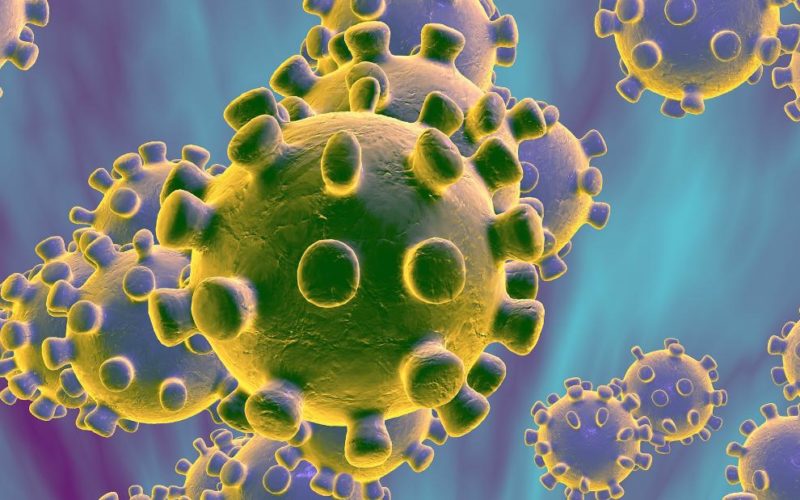
    Corona viruses are a large cluster of viruses that are common among animals. They can rarely transmitted from animals to humans. Thus they are called as ‘Zoonotic’ by scientists. The viruses can make people sick, usually with a mild to moderate upper respiratory tract illness, similar to a common cold.

    Infection:
    They are transmitted by aerosols secretions from respiratory tract. It has an incubation period of two days to a week, eliminating virus for one week.

    Diseases caused by Corona viruses:
    Coronaviruses primarily infect the upper respiratory and gastrointestinal tract of mammals and birds. Six different currently known strains of coronaviruses infect humans. The most recently publicized human coronaviruses causes SARS (Severe acute respiratory syndrome), known as SARS-CoV, has a unique pathogenesis because it causes upper and lower respiratory tract infections and can also cause gastroenteritis. Coronaviruses can also cause pneumonia, either direct viral pneumonia or secondary bacterial pneumonia.

    Symptoms
    Patient can be diagnosed with Runny nose, sore throat, headache, fever, cough and feeling of being unwell. For those with a weakened immune system, the elderly and the very young, there is a chance the virus could cause a lower, and much more serious, respiratory illness like a pneumonia or bronchitis.

    Prevention
    There are currently no vaccines available to protect you against human coronavirus infection. Transmission is reduced through:
    – Washing your hands often with soap and water
    – Avoiding touching eyes, nose, or mouth with unwashed hands
    – Avoiding close contact with people who are sick
    – If you are mildly sick, keep yourself hydrated, stay at home, and rest.
    – If you are concerned about your symptoms, you should see your healthcare provider.
    – Cover your cough or sneeze with a tissue, then throw the tissue in the trash.
    – Clean and disinfect frequently touched objects and surfaces.

    WHO concerns:
    After the deadly coronavirus outbreak killed 17 out of 33 people who contracted it in Saudi Arabia in the past year, the World Health Organization (WHO) has pledged to further investigate the disease spread before millions of Muslims descend on holy sites in Mecca and Medina during the Hajj pilgrimage season in October.

    The Hajj pilgrimage is one of the largest mass gatherings in the world, bringing about 3 million ethnically diverse Muslims to Mecca each year, according to estimates from the Center for disease control and prevention (CDC).

    Globally, from September 2012 to date, WHO has been informed of a total of 153 laboratory-confirmed cases of infection with MERS-CoV, including 64 deaths.

    Treatment:
    You can treat a coronavirus infection the same way you treat a cold like:
    – Get plenty of rest
    – Drink fluids
    – Take over the counter (OTC) medicines for a sore throat and fever. But you should not use Aspirin, use Ibuprofen or Acetaminophen instead.
    – A humidifier or steamy shower can also help to ease a sore throat and scratchy throat.